
The Prophet’s Compassion Transformed the Heart of a Jewish Man
The Prophet’s Compassion Transformed the Heart of a Jewish Man
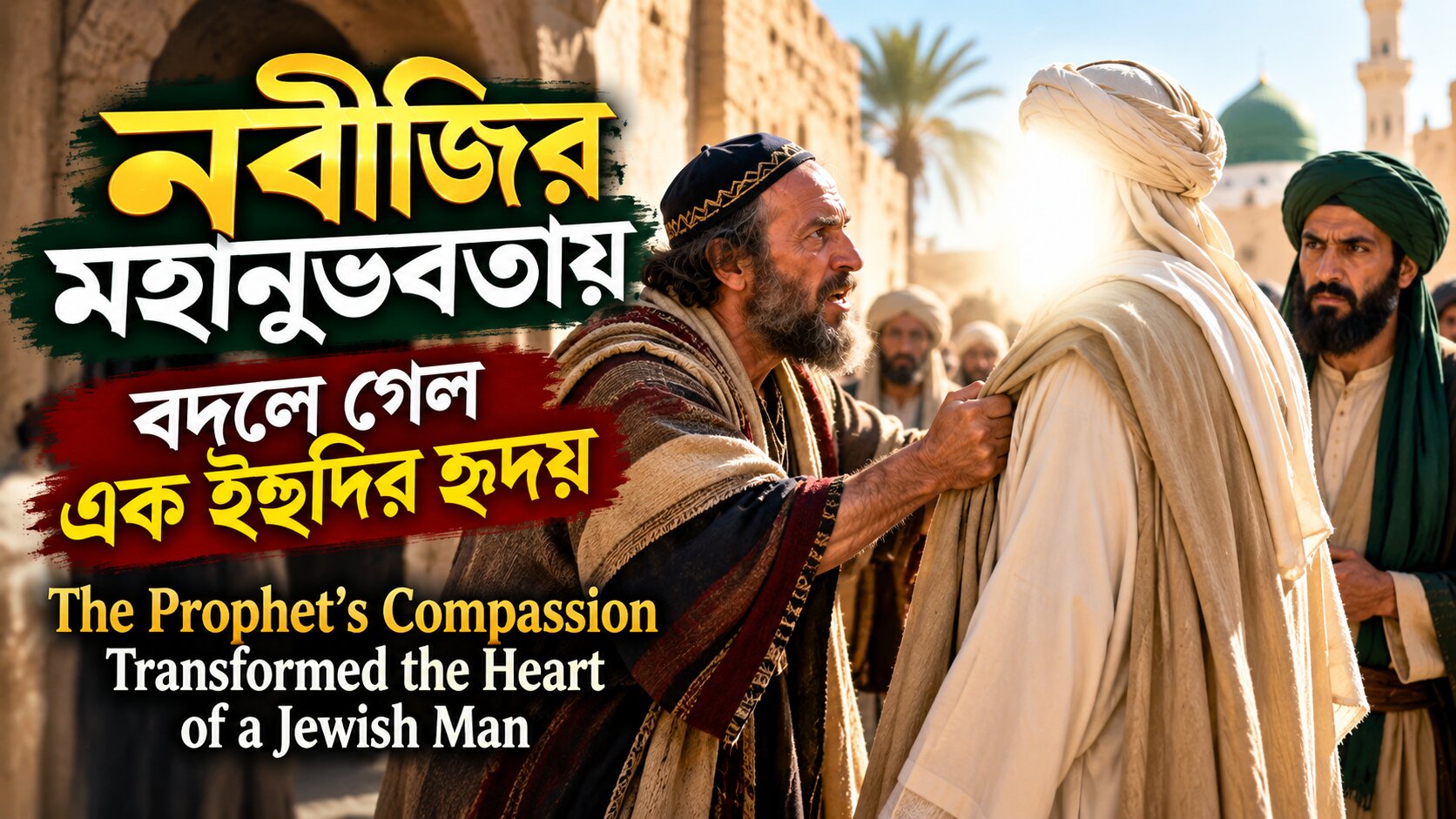
Zayd ibn Sa‘nah was a Jewish man. On one occasion, he entered into a financial transaction with the Messenger of Allah ﷺ. The Prophet ﷺ had borrowed some money from him. The agreed repayment date had not yet arrived; in fact, there were still three days remaining before the payment was due.
One day, the Messenger of Allah ﷺ was walking with some of his Companions. Hazrat Umar ibn al-Khattab رضي الله عنه was with him.
Suddenly, Zayd ibn Sa‘nah rushed toward the Prophet ﷺ, grabbed hold of his garment, and spoke in a very harsh tone:
“O descendants of Abdul-Muttalib! Why do you keep delaying the repayment of your debts?”
Just imagine!
Standing before him was the greatest man in all of humanity, the beloved Messenger of Allah, Muhammad ﷺ. Yet this man was holding onto his garment and speaking to him in such harsh words.
Hazrat Umar رضي الله عنه was standing nearby. He was uncompromising when it came to truth and fiercely opposed to injustice. When he saw what was happening, he could no longer contain himself. His face became red with anger.
But amazingly, the Messenger of Allah ﷺ did not become angry.
Instead, he smiled gently.
Then, in a calm and compassionate voice, he said to Hazrat Umar رضي الله عنه:
“O Umar! Both he and I were in need of something from you. You could have advised me to repay the debt in a better manner, and you could have asked him to demand what was owed to him in a better manner.”
SubhanAllah!
What an extraordinary lesson!
The one who had been treated unjustly was himself telling his Companion:
“You could have advised me more gently.”
This was the humility of the Prophet ﷺ.
This was his character.
This was his extraordinary compassion.
The Messenger of Allah ﷺ then said:
“In fact, the time for repayment has not yet arrived. There are still three days remaining.”
Then he instructed Hazrat Umar رضي الله عنه:
“Pay him what is owed to him, and give him an additional thirty sa‘.”
SubhanAllah!
If it had been an ordinary person, he might have said:
“You are demanding your money before the due date! And on top of that, you are behaving this way? You need to be taught a lesson.”
But the Prophet ﷺ did not take revenge.
He did not respond to an insult with another insult.
Instead, he ordered that the man be given even more than what was owed to him.
This extraordinary act of compassion deeply touched the heart of Zayd ibn Sa‘nah.
He began to realize:
“What kind of man is this?”
I demanded my money before its due date.
I spoke to him harshly.
I even grabbed and pulled his garment.
Yet he did not rebuke me, insult me, or take revenge against me.
Instead, he ordered that my debt be paid—and that I be given even more than what I was owed.
Such character could not belong to an ordinary man!
The Prophet’s ﷺ unparalleled conduct transformed his heart.
The heart that had remained far from the light of Islam was now illuminated by the light of guidance.
Zayd ibn Sa‘nah accepted Islam and became one of the followers of the Messenger of Allah ﷺ.
A Lesson for Us
We are the Ummah of that great Prophet, Muhammad ﷺ.
His character was built upon forgiveness.
His dealings were filled with love and compassion.
His response was characterized by patience and generosity.
So when someone wrongs us, can we not try to forgive a little?
When someone hurts us, can we not show a little patience?
When someone treats us badly, can we not respond with something better?
Allah Almighty says:
“Let them pardon and overlook. Would you not love for Allah to forgive you?”
— Surah An-Nur, 24:22
So let us make a commitment today:
We will not hurt anyone without reason.
When someone hurts us, instead of seeking revenge, we will try to forgive.
When someone treats us badly, we will respond with better character.
Because we are the Ummah of Muhammad ﷺ.
Remember:
The person who learns to forgive opens the door to Allah’s forgiveness.
May Allah grant us the ability to embody the noble character of our beloved Prophet ﷺ and make us people of forgiveness, humility, patience, and beautiful conduct.
Ameen.